How Third-Party Certifications Shape Trust Signals in UK-Regulated Wagering Environments
Written by Elena Simmons · Aug 24, 2026
How Third-Party Certifications Shape Trust Signals in UK-Regulated Wagering Environments
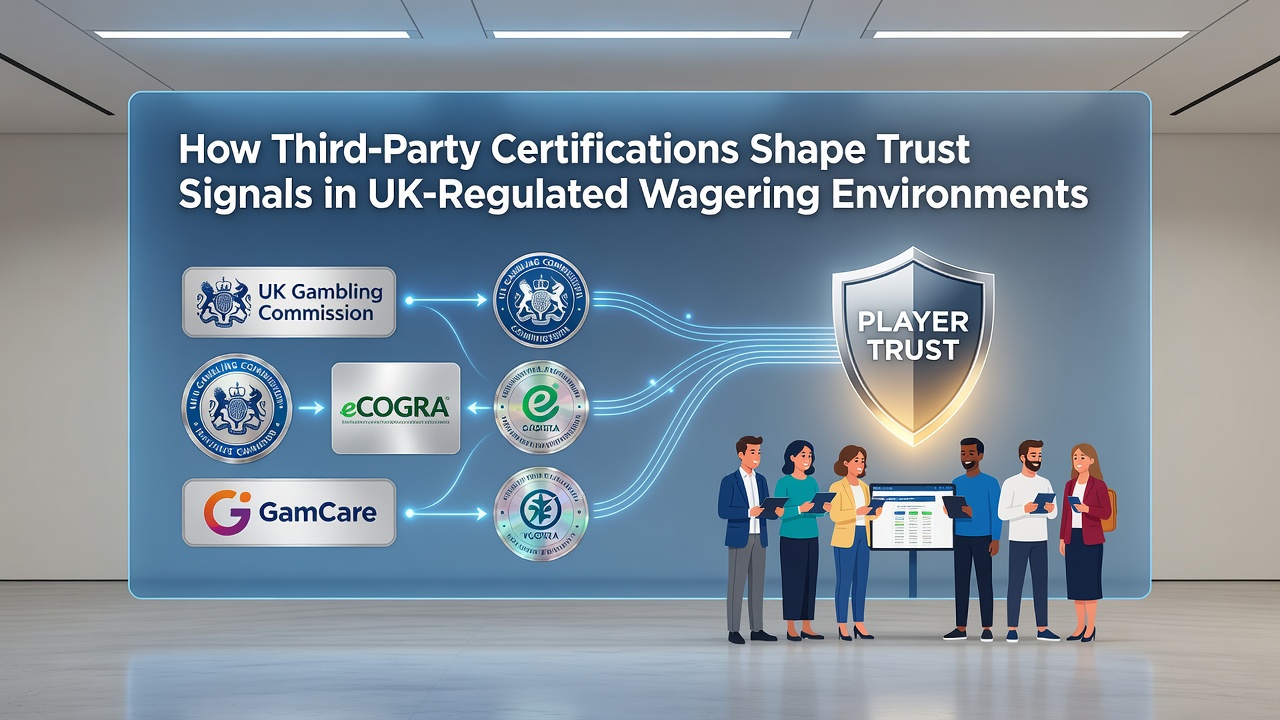
Third-party certifications function as independent verification mechanisms that operators in UK-regulated wagering environments use to demonstrate compliance with technical and operational standards. These certifications cover areas such as random number generator testing, game fairness audits, and data security protocols, which in turn provide observable signals that users and stakeholders reference when assessing platform reliability.
Core Elements of Certification Processes
Certification bodies conduct periodic audits that examine software integrity, payout accuracy, and responsible gaming features. Researchers at institutions like the University of Nevada, Las Vegas have documented how these evaluations generate standardized reports that operators then display as seals or badges on their sites. Observers note that such displays correlate with measurable increases in user engagement metrics across multiple regulated markets, since the presence of verified seals reduces perceived uncertainty for participants evaluating multiple platforms.
Standards organizations like eCOGRA and Gaming Laboratories International perform the bulk of this work through structured testing protocols. Data from industry reports indicate that platforms holding multiple overlapping certifications tend to maintain higher retention rates, because repeated verification cycles create cumulative evidence of consistent performance rather than one-time compliance checks.
Trust Signals in Practice
Trust signals emerge when certification details appear alongside licensing information and user reviews. According to findings published by the Canadian Centre on Substance Use and Addiction, independent audit results influence decision-making patterns among participants who compare operators side by side. The reality is that these signals operate through visible cues such as certification dates, scope of testing, and renewal status, all of which allow quick assessment without requiring users to review full technical documentation.
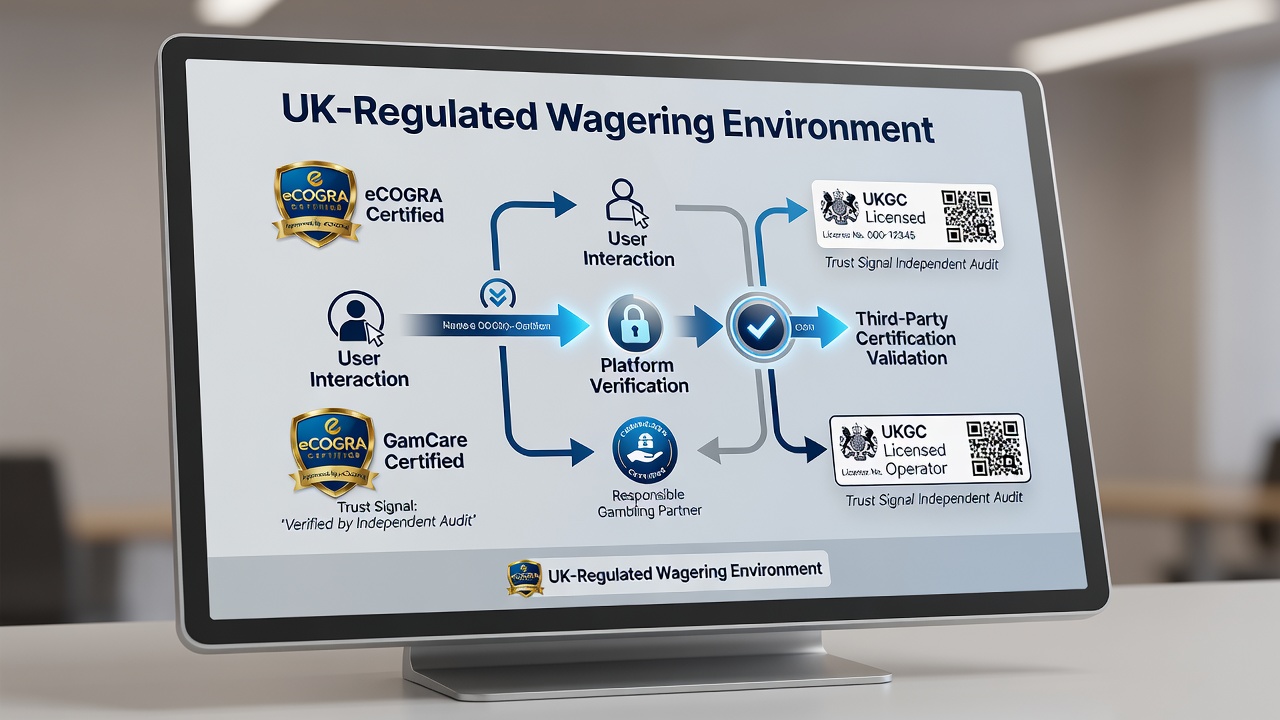
What's interesting is how certification visibility interacts with other trust elements like payment provider partnerships and customer support response times. Platforms that integrate certification badges directly into withdrawal and deposit pages show stronger alignment between stated security claims and actual user behavior patterns tracked in August 2026 analytics.
Regional Variations and Data Patterns
While UK frameworks emphasize certain consumer protection measures, certification practices draw from international standards developed in jurisdictions such as Australia and parts of the European Union. Reports issued by the Australian Gambling Research Centre highlight how cross-border recognition of testing results streamlines operator workflows while still meeting local requirements. Those who've examined adoption rates across platforms find that operators often pursue certifications from multiple bodies to address different market expectations simultaneously.
Evidence from longitudinal studies reveals gradual shifts in how certification information is presented, with increasing emphasis on real-time verification links rather than static images. This evolution allows users to confirm current status directly with the certifying organization, which strengthens the overall credibility of the displayed signals.
Conclusion
Third-party certifications continue to serve as structured mechanisms that translate complex technical compliance into accessible trust indicators within UK-regulated wagering environments. The integration of audit outcomes with user-facing displays creates layered signals that research consistently links to platform selection behaviors, and ongoing developments through 2026 suggest further refinement in how these certifications are communicated and verified across digital channels.