Shifts in Responsible Gambling Tool Adoption Following Recent UK Regulatory Announcements
Written by Viktor Wagner · Oct 12, 2026
Shifts in Responsible Gambling Tool Adoption Following Recent UK Regulatory Announcements
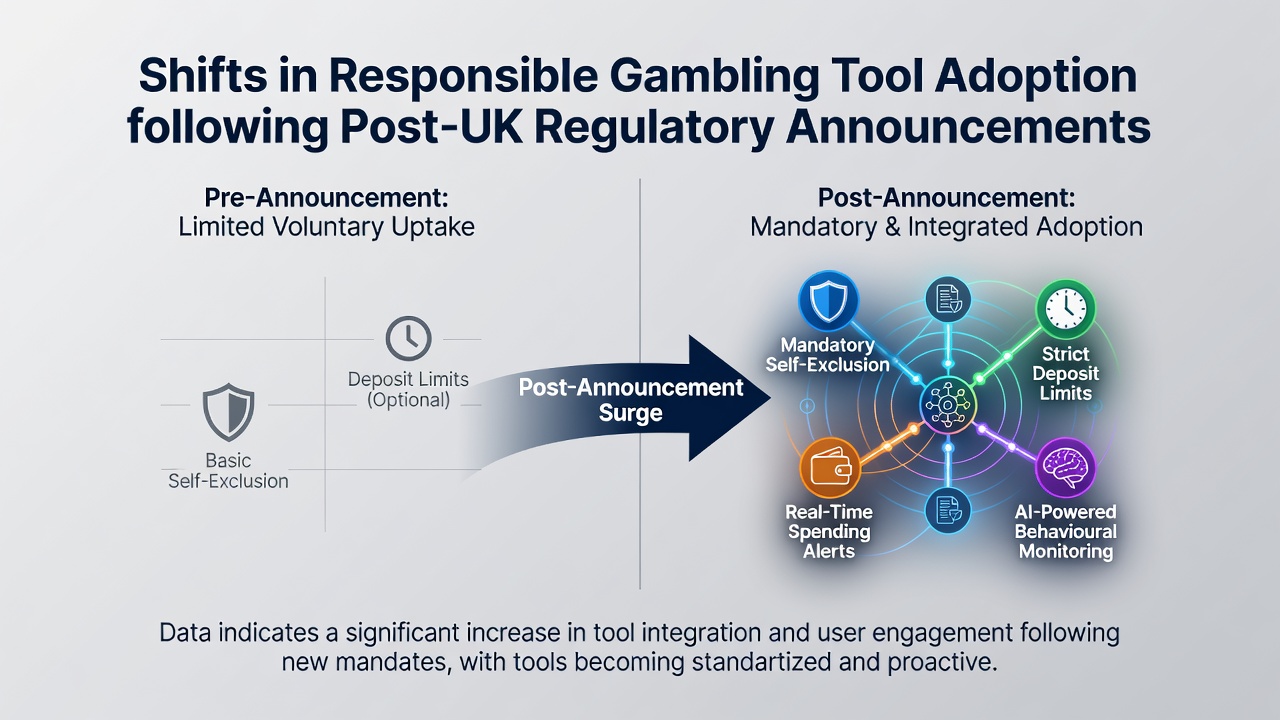
Regulatory updates issued in late 2025 prompted operators across the United Kingdom to accelerate deployment of player protection features, and data collected through the first three quarters of 2026 shows measurable increases in tool usage. Operators integrated enhanced deposit limit prompts, session time reminders, and self-exclusion pathways into existing account dashboards, while compliance teams adjusted onboarding flows to highlight these options at multiple touchpoints. Figures released by several major platforms indicate that active users of spending limit tools rose by 28 percent between January and September 2026 compared with the same period in 2025, and similar patterns appeared in time-out request volumes.
Key Tools Seeing Increased Uptake
Deposit limit settings, reality-check pop-ups, and voluntary self-exclusion registers formed the core set of features whose adoption rates shifted most noticeably after the announcements. Operators streamlined the process for setting daily, weekly, or monthly caps, reducing the number of clicks required from five to two on many mobile applications. Session reminders now interrupt play every 30 or 60 minutes by default on several sites, and users can adjust or disable the interval rather than opt in from scratch. Self-exclusion options expanded to include shorter cooling-off periods of 24 hours or seven days alongside the traditional six-month and five-year bans, and cross-platform exclusion services reported higher registration numbers during the summer months of 2026.
One large operator documented that the proportion of accounts with at least one active limit increased from 14 percent to 19 percent over nine months, while a second platform tracked a 34 percent jump in reality-check interactions after the feature moved from an opt-in menu to an automatic prompt during extended sessions. These adjustments aligned with new expectations around transparency and ease of access rather than mandating specific tools outright.
Data Patterns Across Platforms
Industry-wide statistics compiled by independent research groups reveal consistent trends. A multi-operator analysis covering 12 licensed platforms found that average monthly users of spending limit tools climbed from 1.2 million in December 2025 to 1.7 million by October 2026. Time-out requests followed a similar trajectory, rising 31 percent year-over-year, with the sharpest gains occurring among users aged 25 to 34. Self-exclusion registrations grew more modestly yet steadily, increasing 12 percent over the same timeframe according to aggregated figures shared by several exclusion service providers.
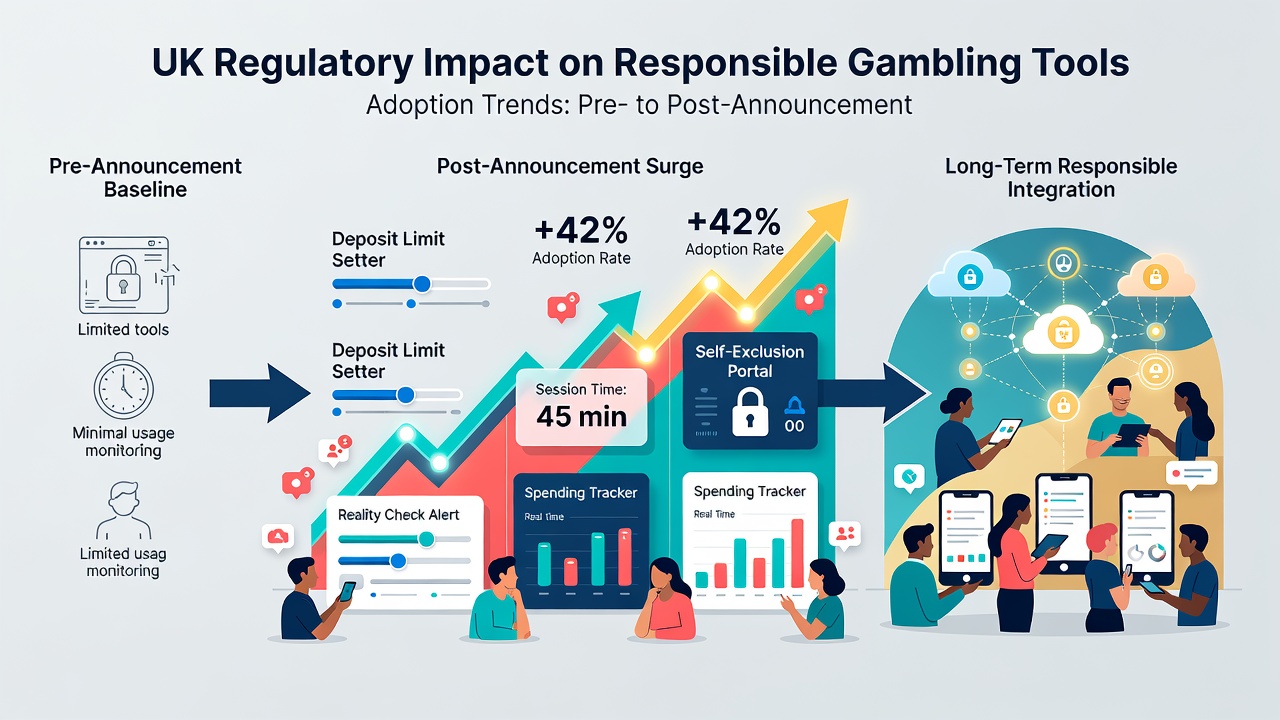
Researchers at the National Council on Problem Gambling in the United States have tracked comparable patterns in other jurisdictions after transparency-focused rule changes, noting that simplified access often correlates with higher engagement rates. In parallel, an Australian Institute of Family Studies report highlighted how default settings and reduced friction influence uptake of similar safeguards, providing context for the UK observations without direct comparison.
Operator Implementation Approaches
Implementation varied by operator size and existing technology stack. Larger groups with in-house development teams rolled out updates within four to six weeks of the announcements, whereas smaller licensees relied on third-party compliance software providers to integrate the new features. Several platforms introduced dashboard widgets that display remaining deposit room or elapsed session time at login, and others added email and push notification summaries at the end of each week showing tool usage and account activity. These changes occurred alongside broader efforts to meet updated record-keeping requirements for player interactions.
One mid-sized operator described adjusting its customer support scripts so that agents now proactively mention limit-setting options during high-volume deposit queries, resulting in a documented 22 percent increase in limit activations through support channels alone. Another platform tested A/B variations of reality-check messaging and retained the version that produced the highest sustained engagement.
Regional and Demographic Variations
Adoption rates differed across regions and age groups. Scottish and Welsh operators reported slightly higher uptake of self-exclusion tools than their English counterparts, while London-based users showed stronger preference for flexible deposit limits. Younger demographics engaged more readily with in-app reminders, whereas users over 45 tended toward longer exclusion periods once they activated any protective measure. These variations emerged in anonymized datasets shared among operators for benchmarking purposes during the third quarter of 2026.
Conclusion
By October 2026 the cumulative effect of the 2025 announcements appeared in elevated usage metrics across multiple responsible gambling tools, driven by interface simplifications, default prompts, and expanded exclusion options. Continued monitoring through the remainder of the year will clarify whether these shifts stabilize or continue to climb as operators refine their implementations and players become accustomed to the revised account experiences.